Service

Black Mould Testing: Identification Without the Panic

Calm, professional identification of suspected dark or 'black' mould in UK homes and commercial buildings — combining laboratory species identification with a moisture investigation that addresses the cause.

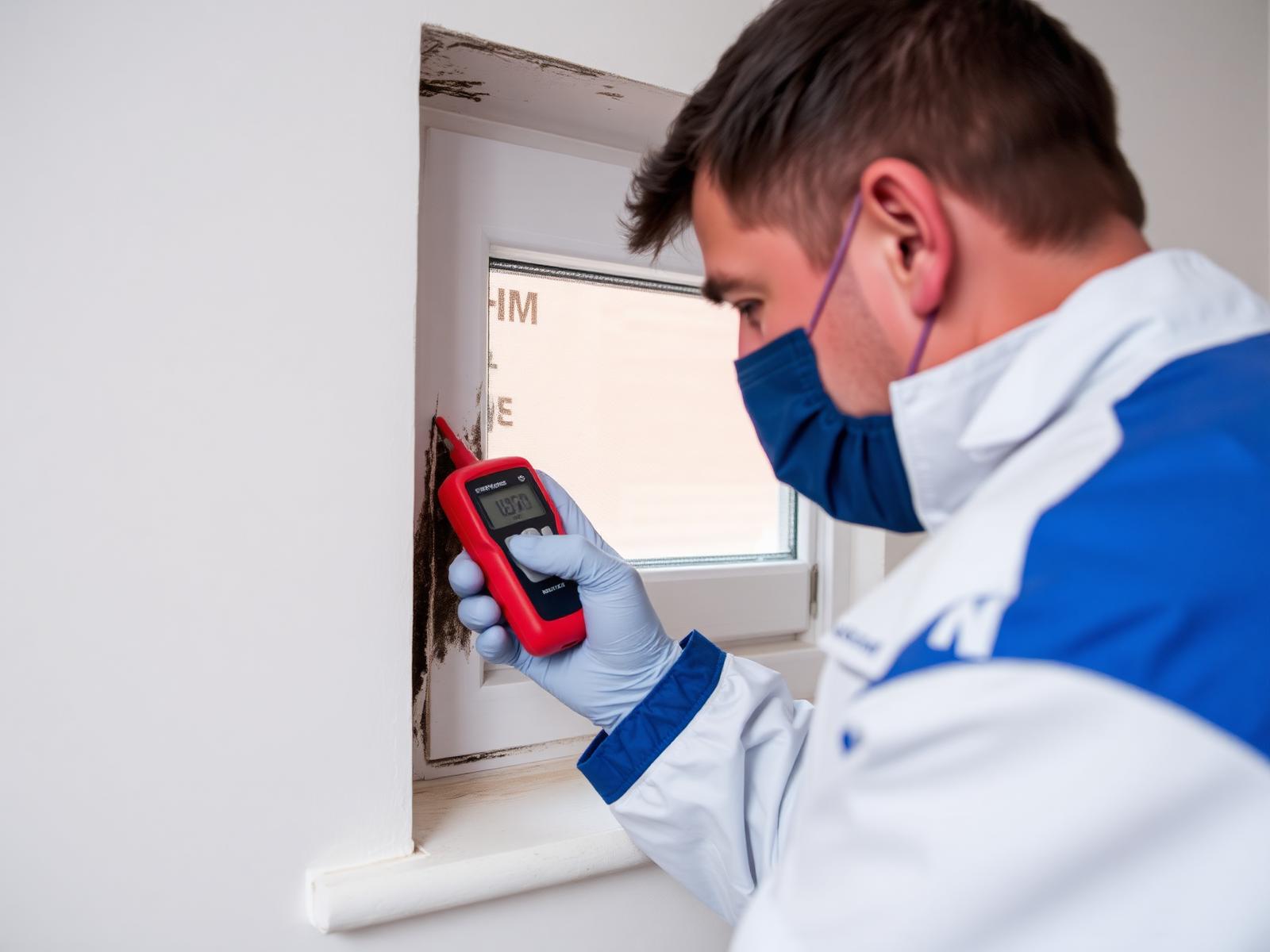
Professional inspector wearing PPE examining a small dark mould patch near a window reveal

Approach

Evidence, not panic

Method

Tape lift + air sample

Output

Species & cause

Scope

Residential & commercial

01

What 'black mould' actually means

'Black mould' is a popular description for any dark visible patch of indoor fungal growth. It is not a species. Many common indoor moulds appear dark — including several Cladosporium, Aspergillus and Penicillium species. Stachybotrys chartarum, the species most associated with the phrase in media coverage, is one of many possibilities and is not the only one of clinical interest.

The job of testing is to identify what is actually present, and to put that identification in the context of where and why it is growing.

02

A non-alarmist approach

We do not use fear-based language and we do not make medical claims that the evidence does not support. Our reports state what was observed, what the laboratory identified, what the moisture readings showed, and what the building context suggests. That is the basis on which sensible remedial decisions are made.

03

How testing is carried out

Where there is a clear visible patch, a surface tape lift is taken directly from the affected material. The tape captures intact spores and structures from the colony, which the laboratory identifies under microscopy. Where hidden growth is suspected or where occupants report symptoms beyond the visible area, a paired indoor and outdoor air sample is added to characterise airborne exposure.

Moisture readings on adjacent surfaces, thermal imaging of cold bridges, and inspection of nearby external defects build the moisture picture that the species result needs to be interpreted against.

04

From identification to remediation

Identification on its own does not solve the problem. Where dark mould is confirmed, the priority is to identify and stop the moisture source — a leak, a cold bridge, a failed flashing, persistent high humidity — and to remove or decontaminate the affected material under appropriate containment. Painting over visible growth without addressing the water is the most common reason that black mould comes back.

05

What testing can and cannot tell you

Species identification tells you what is growing. It does not, on its own, prove that an occupant's symptoms are caused by exposure to that species. Medical diagnosis remains with a clinician. Our reports state the species, the airborne counts where measured, the moisture context and the recommended actions — and we are explicit about what those findings do and do not support.

06

Frequently asked questions

Is all dark mould 'toxic black mould'?

No. Many common indoor moulds appear dark to the naked eye, including Cladosporium, Aspergillus niger and several Penicillium species. Laboratory identification is needed to determine the genus.

What is Stachybotrys?

Stachybotrys chartarum is a dark-coloured mould that grows on cellulose materials kept persistently wet. Identifying it indoors is taken seriously because it indicates sustained water damage, but it is not unique in causing health concerns.

Do you use scare tactics?

No. We report what the sampling and inspection actually show, including species and moisture context, and we do not make medical claims that the evidence does not support.

What happens if Stachybotrys is found?

We recommend a focused moisture investigation to identify the water source, an assessment of the affected materials, and a remediation plan that removes the colonised material under appropriate containment.

Next step

Have suspected black mould identified properly

Arrange Identification