Service

Damp and Mould Surveys: Find the Moisture, Fix the Cause

Independent damp and mould surveys that diagnose the underlying moisture mechanism — condensation, penetrating damp, rising damp, leaks or ventilation failure — so remediation addresses the cause, not only the visible mould.

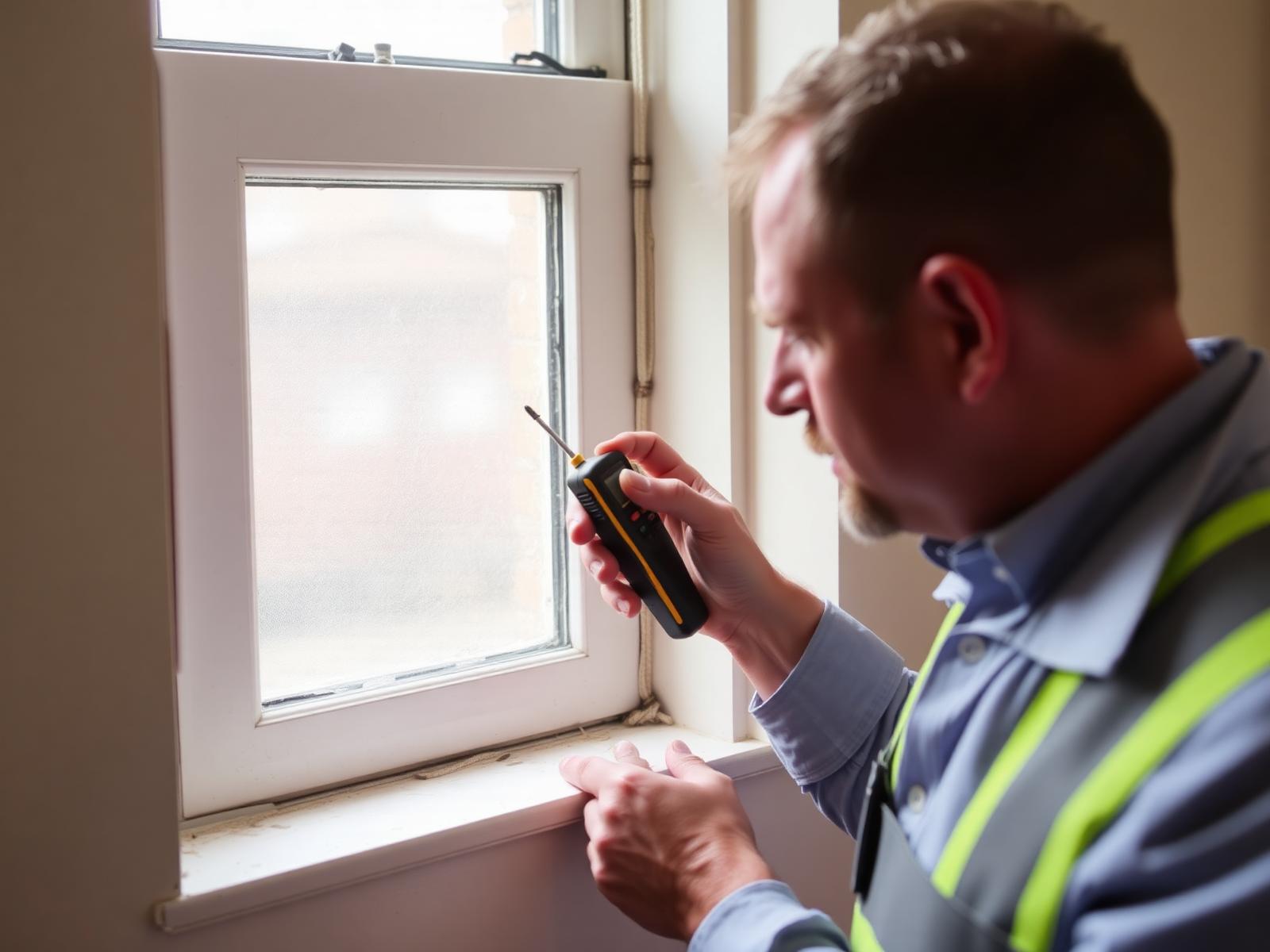
Damp surveyor inspecting a window reveal for condensation and moisture

Diagnoses

Condensation · penetrating · rising

Tools

Moisture · RH · thermal

Output

Cause-based action plan

Suitable for

Repairs · complaints

01

How damp is diagnosed

A damp and mould survey works backward from the visible problem to the moisture mechanism producing it. UK buildings present a small number of recurring patterns: condensation on cold surfaces during the heating season, penetrating damp through failed render, masonry or rainwater goods, rising damp from defective or absent damp-proof courses, plumbing leaks from waste and supply pipework, and construction moisture trapped in new or renovated buildings.

Each pattern leaves a distinctive signature in moisture meter readings, surface temperature, dew point margins and the distribution of staining and growth. A trained surveyor reads those signatures rather than defaulting to a single explanation.

02

The survey process

The visit begins with an external walk-around to record rainwater goods, ground levels, render condition, flashings and roof penetrations. Inside, every affected room is walked with the occupant. Moisture meter readings are taken on plaster, timber and masonry at suspect locations. Surface temperatures and indoor RH are logged so dew point margins can be calculated. Where helpful, thermal imaging maps cold surfaces and trapped moisture without contact.

Ventilation provision is checked room by room: trickle vents, extract fans (and whether they actually draw air), MVHR units and any opening windows in normal use.

03

Ventilation and occupant patterns

In modern UK homes the dominant cause of recurring mould is condensation driven by high internal humidity and inadequate ventilation. The survey records the activities that load the building with moisture — showering, cooking, drying laundry indoors — and the means by which that moisture is supposed to leave. Where ventilation cannot keep up with the moisture load, recommendations focus on the rate, duration and reliability of extract and background ventilation rather than blaming the occupant.

04

When mould sampling is added

Damp surveys do not require mould sampling by default. Sampling is added where occupant health concerns are part of the brief, where hidden growth is suspected, or where defensible exposure data is needed for a complaint or insurance claim. The decision is taken on the day with the occupant rather than imposed in advance.

05

What the report delivers

The report sets out the moisture mechanism identified, the evidence behind that diagnosis, the building defects observed, and a prioritised action plan separating works that fix the cause from cosmetic measures that only treat the symptom. Reports are written so they can be passed directly to a competent builder or used in correspondence with a landlord, housing officer or insurer.

06

Frequently asked questions

What is the difference between damp and mould?

Damp is the underlying moisture problem. Mould is the biological response when damp persists on a suitable surface. Treating mould without addressing damp leads to recurrence.

Do you distinguish condensation, penetrating and rising damp?

Yes. The survey identifies the dominant moisture mechanism — condensation, penetrating damp, rising damp, plumbing leak or construction moisture — because each requires a different remedial response.

Will you recommend chemical injection or tanking?

Only where the evidence supports it. Many homes diagnosed as 'rising damp' in industry literature are in fact suffering from condensation or penetrating damp. We recommend only what the readings and inspection actually justify.

Is the survey suitable for housing complaints?

Yes. Reports are written in plain English and are routinely used to support repair requests, housing complaints and Awaab's Law correspondence.

Next step

Commission an independent damp and mould survey

Book a Survey